
Comparing Glass and Traditional Staircases for Your Home

Updated: Feb 5
When you strip everything else away, the fundamental distinction between these two staircase types comes down to transparency versus solidity. A glass staircase allows light to pass through its structure. A traditional wooden or metal staircase doesn't.
That single characteristic creates ripple effects throughout your interior. It affects how large rooms feel, where natural light reaches, and the overall atmosphere of your hallway or entrance. But it's hardly the only consideration.
Both approaches have genuine merits. Both have limitations worth understanding before you commit. And interestingly, both offer longevity when properly manufactured and installed, this isn't a choice between durability and fragility, as some might assume.
Visual Impact and Aesthetic Appeal
Glass Staircases
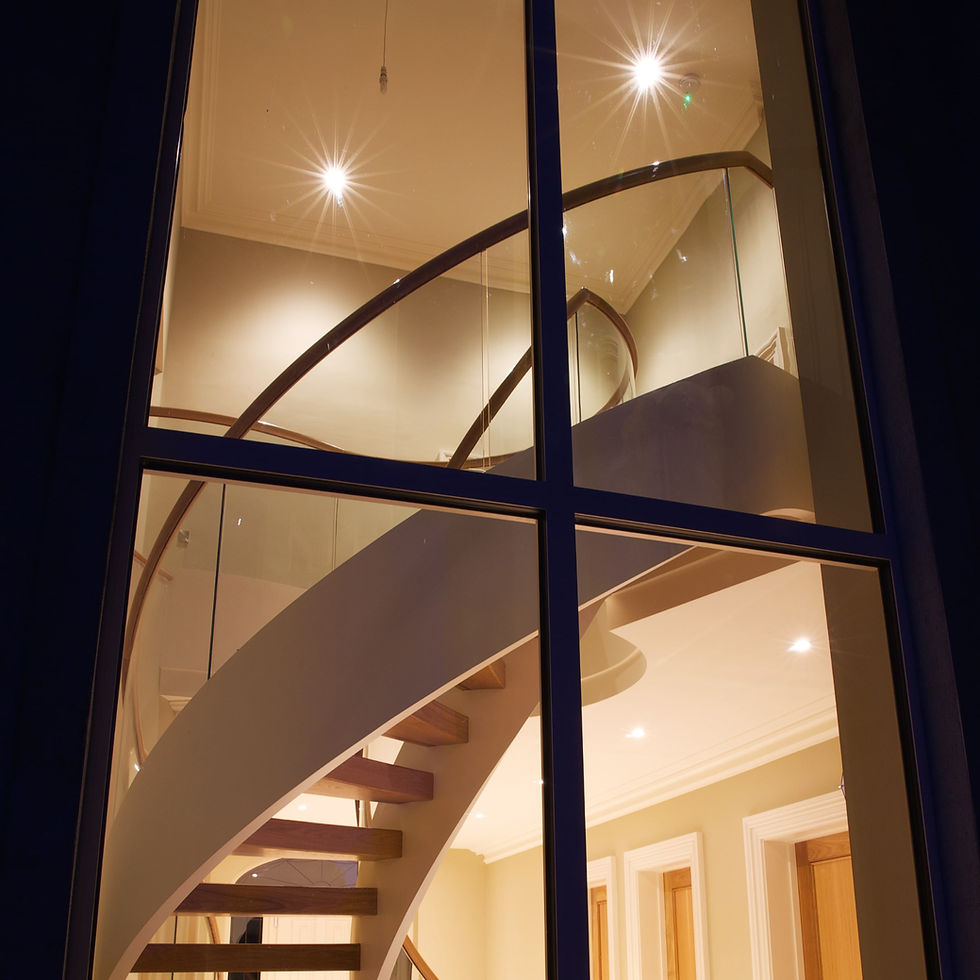
There's no getting around it: a glass staircase makes a statement. The transparency creates an almost sculptural quality, as though the stairs are floating within the space rather than dividing it.
In contemporary homes, particularly those with open-plan layouts, this effect can be transformative. Light flows between floors uninterrupted. Sight lines extend through the structure rather than stopping at solid panels. The result is a sense of openness that's difficult to achieve any other way.
Glass panels and balustrades come in various finishes too. Clear toughened glass offers maximum transparency. Frosted or sandblasted options provide privacy while still allowing light transmission. Tinted glass can add subtle colour accents without losing the essential lightness.
Traditional Staircases
Timber staircases bring warmth that glass simply cannot replicate. There's something inherently inviting about wood, the grain patterns, the natural colour variations, the way it ages and develops character over time.
Oak remains the most popular choice in the UK and Ireland, though walnut, ash, and beech all have their advocates. Each species offers distinct visual qualities, from the pale elegance of ash to the rich darkness of walnut.
Traditional designs also accommodate ornamental details more naturally. Carved newel posts, turned spindles, and detailed handrails suit timber construction beautifully. Period properties, in particular, often call for this kind of craftsmanship.

Light and Space
This is where glass staircases hold their clearest advantage.
A solid timber staircase, particularly with closed risers and substantial balustrades, inevitably blocks light. In a narrow hallway or a home with limited windows, this can make spaces feel darker and more enclosed than necessary.
Glass changes that equation entirely. Natural light passes through treads, balustrades, and panels to reach areas that would otherwise remain in shadow. Rooms feel larger. Hallways feel brighter. The visual barrier between levels largely disappears.
For homes prioritising open-plan living, and that includes most contemporary builds, this characteristic alone often tips the balance toward glass elements, even if only in the balustrade rather than the treads themselves.
Traditional staircases can incorporate some transparency through open risers, but the effect is more limited. The solid treads and structural components still create visual mass that glass simply doesn't.
Durability and Longevity
Both materials offer excellent durability when specified and maintained correctly. This isn't a category where one clearly outperforms the other.
Toughened and laminated glass used in modern staircases is engineered for structural applications. It resists scratches, handles impact remarkably well, and doesn't degrade over time. A glass staircase installed today should look essentially identical in twenty years.
Hardwood timber has proven its durability across centuries of use. Oak staircases from Georgian and Victorian buildings remain functional and beautiful, after two hundred years or more. The material handles foot traffic well, can be refinished if damaged, and actually improves in character as it ages.
The practical differences lie more in how each material shows wear:
Glass displays fingerprints, smudges, and dust more readily
Timber can develop scratches and scuff marks over time
Glass maintains a consistent appearance but requires frequent cleaning
Timber needs periodic refinishing, but hides daily wear better
Maintenance Requirements
Here, the comparison becomes more nuanced than many assume.
Glass staircases are often described as "low maintenance," and in some respects that's accurate. There's no refinishing required, no concerns about rot, warping, or pest damage. The material itself needs essentially no care.
However, and this matters, glass shows every fingerprint, every dust particle, every smudge. Keeping a glass staircase looking pristine requires regular cleaning, sometimes as frequently as weekly, depending on household traffic.
Traditional timber staircases need different kinds of attention. Periodic refinishing, perhaps every five to ten years depending on wear, maintains the protective finish and keeps the wood looking its best. Day-to-day cleaning involves little more than sweeping or vacuuming.
The question isn't really which requires more work overall. It's the kind of maintenance you prefer. Some homeowners find wiping glass panels thoroughly satisfying. Others would rather sand and varnish timber occasionally than clean transparent surfaces constantly.
Maintenance Comparison:
Aspect | Glass Staircase | Traditional Timber |
Daily cleaning | Frequent wiping needed | Sweep/vacuum only |
Periodic refinishing | Not required | Every 5-10 years |
Resistance to rot/pests | Immune | Requires protection |
Scratch visibility | Shows readily | Shows over time |
Fingerprints | Highly visible | Not applicable |
Long-term appearance | Consistent | Develops patina |
Safety Considerations
Safety concerns about glass staircases often stem from misconceptions. Modern staircase glass isn't the fragile material you might picture.
Toughened glass is approximately four to five times stronger than standard annealed glass. Laminated glass goes further still; if it does break, the fragments adhere to an interlayer rather than falling as dangerous shards. Staircase glass meets strict British Standards for impact resistance and load-bearing capacity.
That said, psychological comfort matters too. Some people genuinely struggle with transparent steps, regardless of how strong the engineering is. The sensation of stepping onto something you can see through can trigger unease, particularly for anyone prone to vertigo.
Traditional staircases feel solid and secure to virtually everyone. There's no psychological adjustment required; you step onto wood or metal and know it will hold you.
For households with young children, both options can be made safe. Glass balustrades eliminate the gaps between spindles that sometimes concern parents. Timber balustrades with properly spaced spindles meet the same regulatory requirements.
Cost and Investment
Glass staircases typically cost more than comparable timber designs. That's partly the material cost, partly the specialist manufacturing, and partly the installation expertise required.
The price difference varies considerably depending on the specification. A glass balustrade on an otherwise timber staircase represents a smaller premium than a full glass tread and panel installation. Frameless structural glass costs more than framed designs.
Traditional timber staircases span an enormous price range. A standard softwood staircase costs significantly less than a bespoke hardwood design with hand-carved details. At the premium end of the timber market, prices can approach or exceed glass alternatives.
Worth considering: property value implications. Glass staircases are often viewed as desirable features by prospective buyers, particularly in contemporary properties. They can add to a home's perceived value and appeal.
Interior Style Compatibility
Neither material suits every interior equally well.
Glass works best with:
Contemporary and minimalist designs
Open-plan layouts
Light-filled, airy spaces
Industrial or urban aesthetics
Modern new-builds
Traditional timber suits:
Period properties and heritage conversions
Rustic or country-style interiors
Warm, cosy atmospheres
Traditional architectural details
Properties seeking timeless rather than contemporary appeal
That said, the boundaries aren't rigid. Glass elements can work surprisingly well in period properties when carefully designed. Timber staircases can anchor contemporary spaces beautifully. The skill lies in the specification and execution.
Hybrid Approaches: The Best of Both
You don't necessarily have to choose one material exclusively. Many contemporary staircases combine glass and timber, or glass and steel, to achieve specific effects.
Common combinations include:
Timber treads with glass balustrades – warmth underfoot with transparency at the sides
Steel frames with timber cladding and glass panels – structural integrity with mixed materials
Oak handrails on frameless glass balustrades – comfortable grip with visual openness
Floating timber treads with glass railing – dramatic appearance with natural materials
These hybrid designs often deliver the practical benefits of both materials while creating visually distinctive results. A timber tread feels warm and substantial underfoot. Glass balustrades allow light through and maintain sight lines. Together, they offer a compromise that suits many homeowners better than committing entirely to either material.
Making Your Decision
The right choice depends on your specific circumstances. Consider:
Your interior style – Does your home lean contemporary or traditional? What materials dominate your existing décor?
Light requirements – Is natural light abundant or limited? Would transparency make a meaningful difference to how spaces feel?
Maintenance preferences – Are you comfortable with frequent cleaning, or would periodic refinishing suit you better?
Household composition – Do family members have concerns about transparent treads? Are there specific safety considerations?
Budget constraints – What price range are you working within? Where do your priorities lie?
Neither option is objectively superior. Both offer genuine advantages. The decision ultimately comes down to which set of characteristics better aligns with your priorities and your home's character.
Frequently Asked Questions
Can glass balustrades be added to an existing timber staircase?
Yes, glass balustrades can replace traditional timber spindles on most existing staircases. The installation involves removing the current balustrade system and fitting glass panels with appropriate fixings, either into channels at floor level or with clamp fittings attached to treads. Structural assessment may be needed to confirm that the existing stringers and treads can support the new configuration. This approach offers a cost-effective way to modernise a staircase without complete replacement.
How do glass staircases perform in homes with pets?
Glass staircases handle pet traffic well. The toughened material resists scratches from claws better than many expect, though very large dogs with particularly hard nails could potentially mark the surface over time. Smooth glass can be slippery for pets, making anti-slip treatments advisable. Glass balustrades eliminate gaps where small animals might get stuck, a genuine advantage over some traditional spindle designs. Overall, glass is neither better nor worse than timber for pet-owning households.
Do glass treads become slippery when wet?
Smooth, polished glass can be slippery when wet, which is why reputable manufacturers apply anti-slip treatments as standard. Options include ceramic frit coatings, acid-etched textures, or sandblasted finishes, all of which provide grip without significantly compromising transparency. UK building regulations require adequate slip resistance for staircase surfaces. Any professionally manufactured glass staircase will incorporate appropriate treatments to meet these requirements.
How do temperature variations affect glass staircases?
Glass staircases handle normal UK temperature variations without issue. The material doesn't expand or contract as noticeably as timber does with humidity changes. Glass won't warp, crack from central heating, or develop gaps during dry winters. In unheated spaces or conservatories with extreme temperature swings, consideration should be given to thermal stress in fixings, but for typical residential applications, temperature presents no concerns.
Create Your Perfect Staircase with Bavari
Whether you're drawn to the contemporary elegance of glass or the timeless warmth of traditional craftsmanship, your staircase deserves expert attention. At Bavari, our master craftsmen create bespoke staircases for discerning clients across Ireland, the UK, and Europe, working with glass, timber, steel, and combinations of all three.
Get in touch to discuss your project and explore your options. Visit bavari-stairs.com or contact our team directly to arrange a consultation.


Comments