
Glass Staircase Safety: Facts, Myths & What to Expect

Updated: Feb 5
The Short Answer
Yes, glass staircases are absolutely safe when manufactured correctly, installed professionally, and compliant with UK building regulations. The material used in modern staircase construction bears no resemblance to the fragile glass you might picture. We're talking about engineered safety products designed specifically to bear substantial loads, resist impact, and protect people even in worst-case scenarios.
That said, the question itself is entirely reasonable. Most of us have grown up associating glass with fragility. Windows break, drinking glasses shatter, and our instincts tell us to be careful around transparent surfaces. So when someone suggests walking on glass steps every day, perhaps with children running up and down, it's natural to feel uncertain.
Let's address those concerns properly.
Why the Safety Concerns Exist
The hesitation around glass stairs usually comes down to a few specific worries:
Will the glass hold my weight? People imagine putting all their body weight on something transparent and wonder if it might crack.
What if someone falls against a glass balustrade? There's a fear that impact could cause the panel to shatter.
Is glass slippery? Smooth surfaces and staircases don't seem like a natural combination.
What about children and pets? Families worry about additional risks in busy households.
These are legitimate questions. The good news is that contemporary glass staircase engineering addresses every one of them, quite thoroughly, in fact.
Understanding Toughened Glass
The glass used in staircases isn't the same material as your windows at home. Toughened glass, sometimes called tempered glass, undergoes a specialised heat treatment process that fundamentally changes its properties.
Here's what happens: the glass is heated to approximately 620°C and then rapidly cooled. This creates tension within the material that makes it around four to five times stronger than regular annealed glass of the same thickness.
But strength isn't the only benefit. Toughened glass also behaves differently when broken. Rather than fracturing into long, dangerous shards, it crumbles into small, relatively blunt pieces. This dramatically reduces the risk of serious injury if breakage ever occurs.
For staircase applications, toughened glass typically needs to be at least 10mm thick, though structural treads often require considerably more.
Laminated Glass: The Extra Layer of Protection
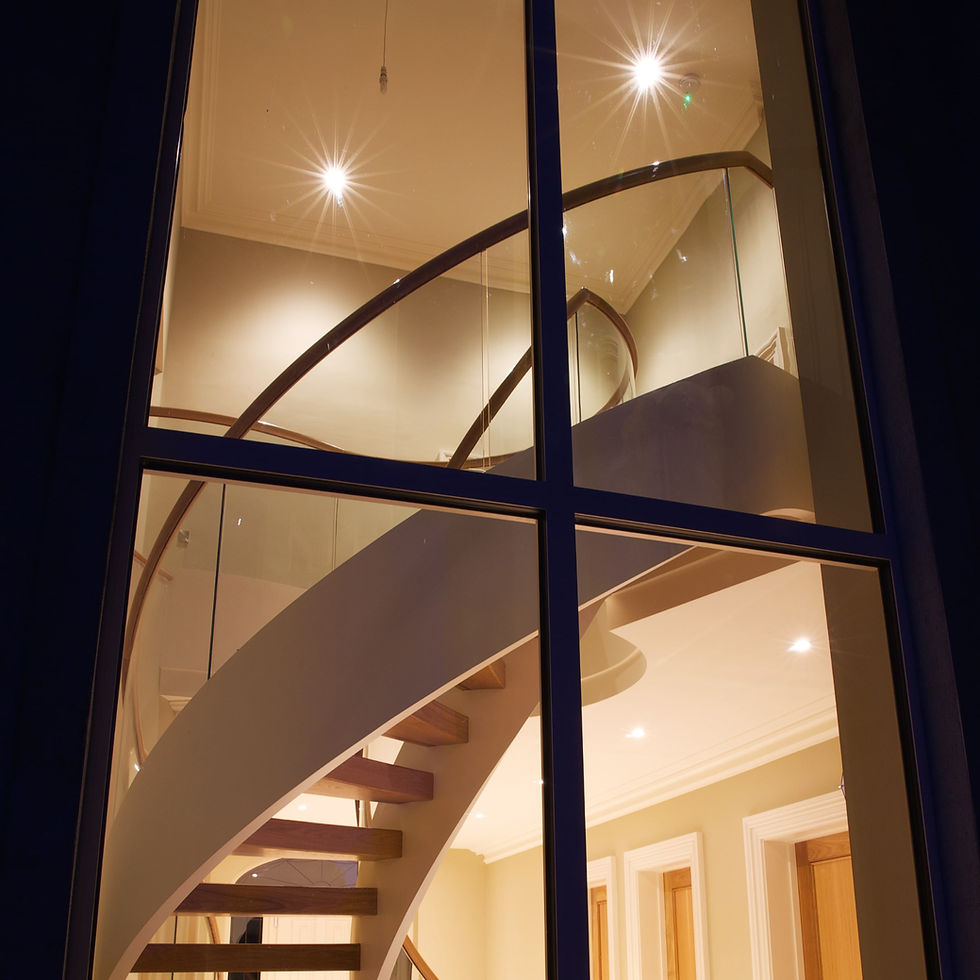
While toughened glass is impressive, laminated glass takes safety further still. This is often the preferred choice for staircase treads and balustrades where structural integrity is paramount.
Laminated safety glass consists of two or more layers of glass bonded together with a PVB (polyvinyl butyral) interlayer. Think of it as a glass sandwich, and that interlayer is what makes all the difference.
If laminated glass does break, the fragments adhere to the interlayer rather than falling away. The panel remains largely intact, continuing to function as a barrier even when compromised. For balustrades without handrails, building regulations typically require laminated glass specifically because of this fail-safe behaviour.
Many high-specification staircases use toughened laminated glass, combining both technologies. You get the impact resistance of tempering plus the post-breakage safety of lamination.
Irish Building Regulations and Compliance
Ireland's regulatory framework operates under Technical Guidance Document K (TGD K), which governs stairways, ladders, ramps, and guards. While the documentation differs from the UK system, the underlying safety principles remain consistent.
Key Irish standards include:
TGD K (2014) – covers stairway design, guarding requirements, and protection from falling
TGD B – addresses fire safety, relevant for staircases forming part of escape routes
TGD M (2022) – specifies access and use requirements, particularly for accessibility
BS 6180:2011 – referenced within Irish regulations for barrier specifications
I.S. EN 12600 – glass impact classification, harmonised with European standards
For glass balustrades in Irish properties, the 100mm sphere rule applies universally. Guarding becomes mandatory wherever the total rise exceeds 600mm, and glass panels, when properly specified, satisfy this requirement while maximising light flow.
Load-bearing specifications mirror European norms. Domestic glass balustrades must withstand horizontal line loads, with calculations accounting for glass type, thickness, and fixing method. Laminated glass remains the preferred choice for most residential applications, as it holds together even if the outer layer cracks.
The Building Control Act places primary responsibility for compliance on designers, builders, and property owners. Working with a manufacturer who understands both Irish and UK standards ensures your glass staircase meets all applicable requirements, particularly important if you're in Northern Ireland, where UK regulations apply, or if you're planning to sell to buyers familiar with either market.
Professional installers will provide documentation confirming compliance with TGD K and relevant European standards. This paperwork proves valuable during property sales, giving potential buyers confidence that the installation meets current safety requirements.
UK Building Regulations and Compliance
Glass staircases in the UK must comply with several regulatory frameworks. These aren't optional guidelines; they're legal requirements that any reputable manufacturer will meet as standard.
Key regulations include:
Approved Document K – covers protection from falling, collision, and impact
BS 6180:2011 – specifies requirements for barriers in and about buildings
BS EN 12600 – classifies glass by impact performance
Approved Document N – addresses glazing safety in critical locations
For glass balustrades, the specifications become quite detailed. Frameless systems using laminated glass must meet specific load-bearing requirements: 0.36 kN/m for domestic settings, rising to 1.5 kN/m for public areas. Glass thickness, fixing methods, and structural calculations all require careful attention.
What is the practical effect of these regulations? Any properly installed glass staircase has been engineered, tested, and certified to handle far more stress than it will ever encounter in normal use.
Load-Bearing Capacity
This is perhaps the most common concern: can glass actually support people walking on it?
The answer involves some numbers that might surprise you. A typical glass tread designed for residential use can support loads of 5 kN per square metre or more, equivalent to several hundred kilograms concentrated on a relatively small area. That's considerably beyond what any household would ever require.
Structural glass treads are typically constructed from multiple laminated layers, often totalling 30mm to 50mm in thickness. The engineering calculations account for static loads (people standing), dynamic loads (people walking or running), and impact loads (something falling or someone stumbling).
Commercial installations face even more demanding requirements and are built accordingly. Glass floors in public buildings, museums, and retail spaces routinely support hundreds of visitors daily without incident.
Anti-Slip Treatments and Surfaces
Smooth glass and bare feet might seem like a risky combination, particularly on stairs. Modern glass staircase design addresses this in several ways.
Common anti-slip solutions include:
Ceramic frit coatings – textured particles fused onto the glass surface during manufacturing
Acid-etched finishes – creating a subtly rough texture that improves grip
Sandblasted surfaces – providing both visual privacy and additional traction
Applied anti-slip strips – adhesive or bonded treads at the nose of each step
Frosted or textured glass – inherently less slippery than polished surfaces
The choice depends on aesthetic preferences and the level of slip resistance required. For staircases, most specifiers recommend at least a moderate anti-slip treatment. The glass still looks beautiful, but your footing remains secure.
Glass Balustrades and Railings
Many people encounter glass on staircases through balustrades rather than treads. Glass panels replacing traditional spindles have become extremely popular, and the safety considerations are slightly different.
Glass balustrades must withstand horizontal pressure, such as someone leaning against them, for instance, or losing their balance. The load requirements specified in BS 6180 ensure panels can handle these forces comfortably.
Frameless glass balustrades often use 15mm to 21.5mm toughened laminated glass, secured in floor-mounted channels or clamps. The thickness and fixing method are calculated based on the span and the required load resistance.
Framed systems incorporate metal posts or handrails, which can allow slightly thinner glass panels while maintaining equivalent safety. Both approaches meet regulatory requirements when properly specified and installed.
Safety for Families with Children
Parents understandably want extra reassurance when considering glass staircases. The good news: glass can actually offer advantages over traditional alternatives in some respects.
Visibility – Glass balustrades allow parents to see children on the stairs from adjacent rooms. There are no solid panels blocking sight lines, making supervision easier.
No gaps – Unlike traditional spindle balustrades, where small fingers or toys might get caught, glass panels present continuous surfaces with no entrapment hazards.
Smooth edges – Quality glass installations feature polished edges with no sharp corners. There's nothing for children to catch themselves on.
Compliance with the 100mm rule – Building regulations require that gaps in balustrades must not allow a 100mm sphere to pass through. Glass panels inherently satisfy this requirement.
The transparency can take some adjustment. Toddlers might not immediately recognise glass as a barrier. Some families choose frosted or partially obscured glass to make the boundary more obvious, though most children quickly learn the limits.
Durability and Longevity
Glass staircases aren't just safe, they're remarkably durable. Unlike timber that can warp, carpet that wears, or metal that may rust, quality safety glass maintains its properties almost indefinitely.
Toughened glass resists scratches far better than regular glass. The same heat treatment that creates strength also hardens the surface. Day-to-day use, including shoes, pets, and cleaning, won't degrade the material noticeably.
Laminated glass panels remain stable for decades. The PVB interlayer is designed to resist UV degradation, and the glass itself doesn't deteriorate with age. Assuming proper installation, a glass staircase should last the lifetime of the building.
Maintenance and Hygiene
From a practical standpoint, glass staircases are among the easiest to maintain. There's no vacuuming required, no polishing of timber, no repainting of spindles.
Cleaning typically involves nothing more than glass cleaner and a cloth. Fingerprints and dust show more readily on transparent surfaces than on opaque materials; that's the trade-off for the visual appeal, but removing them takes moments.
Hygiene is genuinely superior to many traditional materials. Glass doesn't harbour bacteria, dust mites, or allergens the way carpeted stairs can. It doesn't absorb spills or odours. For households with allergy sufferers or where cleanliness is a priority, this can be a significant advantage.
Professional Installation Matters
All of the safety features discussed above depend on proper installation. This isn't a DIY project, not even close.
Glass staircase installation requires:
Accurate structural assessment of the supporting elements
Precise measurements and glass cutting
Correct specification of fixing systems
Compliance verification with building control
Professional handling of heavy, fragile components
Reputable manufacturers provide installation services or work with certified contractors. The specification, engineering, and fitting all need to work together seamlessly. Shortcuts at any stage could compromise safety.
When choosing a supplier, look for experience, certifications, and a willingness to explain how their products meet regulatory requirements. Any reluctance to discuss compliance should be a warning sign.
Certifications to Look For
Several certifications indicate that glass products meet appropriate safety standards:
Certification | What It Confirms |
BSI Kitemark | Product tested and manufactured to British Standards |
BS EN 12600 | Impact performance classification verified |
BS EN 14449 | Laminated glass interlayer quality confirmed |
CE Marking | Compliance with European construction product standards |
BS 6206 | Safety glazing classification achieved |
Glass bearing these marks has been independently tested and verified. The markings are typically etched or printed onto the glass itself, though they may be positioned discreetly near edges.
Comparing Glass to Traditional Materials

How does glass stack up against conventional staircase materials from a safety perspective?
Timber – Beautiful and traditional, but can become slippery when polished, may develop splinters over time, and spindle gaps require careful spacing to meet regulations.
Metal – Strong and durable, but can be slippery when wet, may corrode in certain environments, and feels cold underfoot.
Carpet – Soft and slip-resistant initially, but wears over time, can hide trip hazards, and harbours dust and allergens.
Glass – Consistent properties throughout its lifespan, easy to clean, hygienic, and transparent for visibility. Requires appropriate anti-slip treatments but offers excellent durability.
No material is perfect for every situation, but glass compares favourably on most safety criteria when properly specified.
Addressing Vertigo and Psychological Comfort
For some people, the transparency of glass steps creates psychological discomfort even when they understand the material is structurally sound. This is worth acknowledging honestly.
Frosted or textured glass can help considerably. By obscuring the view through the treads, these finishes make the stairs feel more solid underfoot. The transparency that makes glass architecturally striking isn't always necessary, particularly if it causes anxiety.
Partially frosted designs offer a compromise: clear edges or sections maintain the light-flowing qualities of glass while providing more visual anchoring at the centre of each tread.
If vertigo is a significant concern, discuss options with your staircase designer. Solutions exist that preserve most of the glass's aesthetic appeal while addressing comfort issues.
Frequently Asked Questions
Can glass stair treads support heavy furniture being moved?
Glass stair treads designed for residential use can typically support concentrated loads of several hundred kilograms, far exceeding what most furniture weighs. However, dragging heavy items across glass surfaces isn't recommended, as it could cause scratching despite the material's hardness. When moving substantial furniture between floors, using proper lifting techniques and protective coverings reduces any risk of surface damage while keeping the glass structurally sound throughout.
How often should glass balustrades be inspected for safety?
For residential installations, annual visual inspection is generally sufficient. Check for chips, cracks, or loose fixings, and ensure the glass remains securely seated in its mounting system. Commercial installations may require more frequent professional inspections depending on usage levels and regulatory requirements. Any damage, however minor, should prompt immediate assessment by a qualified installer; small chips can potentially propagate into larger cracks under stress.
Do glass staircases require special cleaning products?
Standard glass cleaning products work perfectly well for glass staircases. Avoid abrasive cleaners or scouring pads, which could damage anti-slip coatings or scratch the surface. Microfibre cloths prevent streaking and work effectively with minimal product. For stubborn marks on textured anti-slip surfaces, soft brushes help reach into the texture without causing damage. Most maintenance simply involves regular wiping to remove fingerprints and dust.
What happens if a glass panel breaks?
If toughened glass breaks, it fragments into small, relatively safe pieces rather than dangerous shards. Laminated glass holds together even when cracked, maintaining its barrier function. Either way, the failure mode is designed to minimise injury risk. Replacement panels can typically be manufactured and installed within a few weeks, though temporary barriers may be needed in the interim. Breakage in properly installed, correctly specified glass staircases is extremely rare.
Are glass staircases suitable for commercial buildings?
Glass staircases are increasingly popular in commercial settings precisely because they meet demanding safety requirements while offering striking visual appeal. Load requirements are higher than residential specifications, 1.5 kN/m for public areas versus 0.36 kN/m domestically, but glass can be specified accordingly. Many offices, hotels, retail spaces, and public buildings feature glass staircases that handle heavy daily traffic without incident.
Ready to Explore Glass Staircase Options?
When designed, manufactured, and installed by experienced professionals, glass staircases offer safety that matches or exceeds traditional materials. At Bavari, our master craftsmen create bespoke staircases for discerning clients across Ireland, the UK, and Europe, combining architectural beauty with uncompromising structural integrity.
Get in touch to discuss your project and find out how we can create a stunning, safe glass staircase for your home. Visit bavari-stairs.com or contact our team directly to arrange a consultation.
Related Articles:
Strategic Staircase Placement: Finding the Ideal Location for Your Home
Space Planning Essentials: Calculating the Right Dimensions for Your Staircase
How Many Steps For A Staircase: The Complete Calculation Guide
How to Tell When Your Staircase Requires Restoration: When To Act Before It’s Too Late
The Complete Guide to Selecting Staircase Materials for Your Home
Deciding Between Staircase Renovation and Complete Replacement


Comments